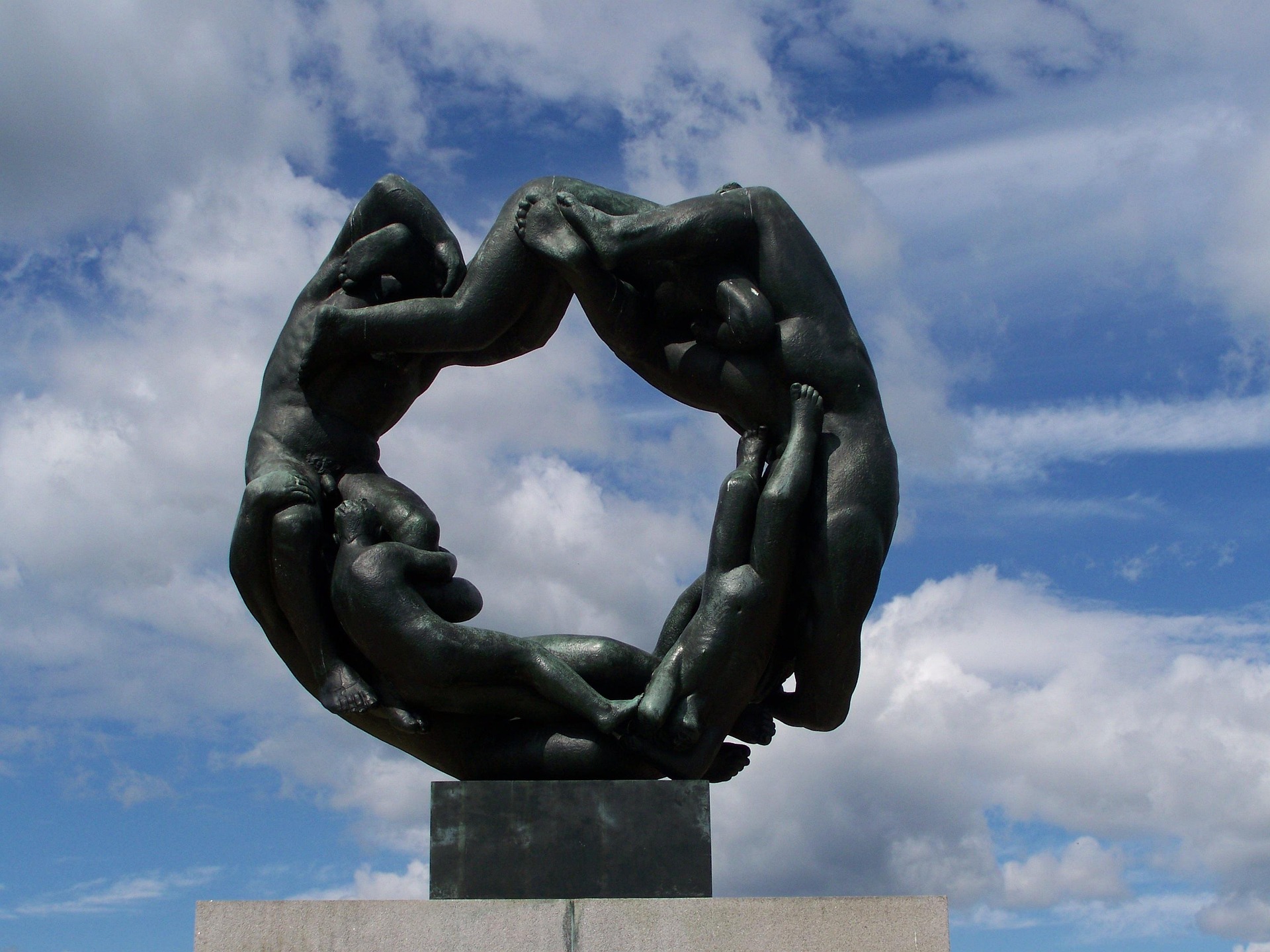
If you visit Vigeland Park for the first time, one thing usually stands out immediately: almost every statue is completely nude. Many visitors wonder if there is a special meaning behind it, or if the sculptures are meant to be shocking.
The short answer is that the nudity is intentional, but not for controversy. Gustav Vigeland wanted to show people without the distractions of clothing, fashion, or social status. The park is also completely free to enter, making it one of the easiest places to visit in Oslo whether you stay for 20 minutes or several hours.
Why are all the statues nude?
Gustav Vigeland created more than 200 sculptures showing people of different ages, from babies and children to adults and elderly people. By leaving everyone unclothed, he focused attention on the human body, movement, emotions, and relationships rather than on uniforms, wealth, or the time period.
You will see people hugging, running, carrying children, dancing, struggling, and growing old. The sculptures are not about individual people. They represent common human experiences that visitors from many cultures can recognize.
If you are visiting with children, there is generally nothing to worry about. Norwegian families regularly visit the park, and the nudity is viewed as artistic rather than sexual. It is common to see school groups, families with strollers, and tourists all sharing the same paths.
Is Vigeland Park free?
Yes. You do not need a ticket to enter Vigeland Park, and you can visit every day throughout the year without paying an entrance fee.
This makes it one of Oslo’s best places for travelers on a budget. You can walk through the park for a quick visit or spend several hours looking at the sculptures without worrying about admission costs.
If you decide to visit the nearby Vigeland Museum, that is a separate attraction with its own admission fee.
How much time should you allow?
Most visitors spend between one and two hours in the park. If you enjoy photography or like to stop and study the sculptures, you may stay longer.
The central walkway is easy to follow and leads you past the park’s best-known works, including the Monolith and the large fountain. The paths are wide, and there are plenty of places to sit if you want a break.
What should you expect?
The park is much larger than many visitors expect. Although the walking is easy, you will cover a fair distance if you want to see everything. Wear comfortable shoes, especially if you plan to combine the visit with other sightseeing in Oslo.
Weather can also make a big difference. In summer, bring water and sunscreen because there is limited shade in some open areas. In winter, paths are usually cleared, but they may still be slippery after snowfall or freezing rain. Warm clothing and shoes with good grip are recommended.
Public toilets are available in the park during the main visitor season, and mobile phone coverage is generally excellent throughout the area.
Is it worth visiting?
If you enjoy art, photography, architecture, or simply want to experience one of Oslo’s most famous public spaces, the answer is usually yes. Even people who are not especially interested in sculpture often find themselves stopping to look more closely because every statue tells a different story through posture and expression.
The park is especially enjoyable early in the morning or later in the evening during summer, when there are fewer tour groups and you have more space to walk and take photos. Midday in peak season can become crowded around the Monolith, so expect to share the viewpoints with many other visitors.
Knowing in advance why the statues are nude often changes the way people experience the park. Instead of seeing hundreds of naked figures, you begin to notice the emotions, families, friendships, and stages of life that Gustav Vigeland wanted visitors to think about. Best of all, you can experience all of this without paying an entrance fee.
