Free Things to Do in Oslo – How to Survive Norway’s Most Expensive City Without Selling a Kidney

Let’s address the polar bear in the room: Oslo is expensive. It’s the kind of expensive that makes you check your bank balance after buying a latte just to make sure the transaction didn’t trigger a fraud alert. We’ve all heard the legends of the €10 beer and the sandwich that costs as much as a small television.

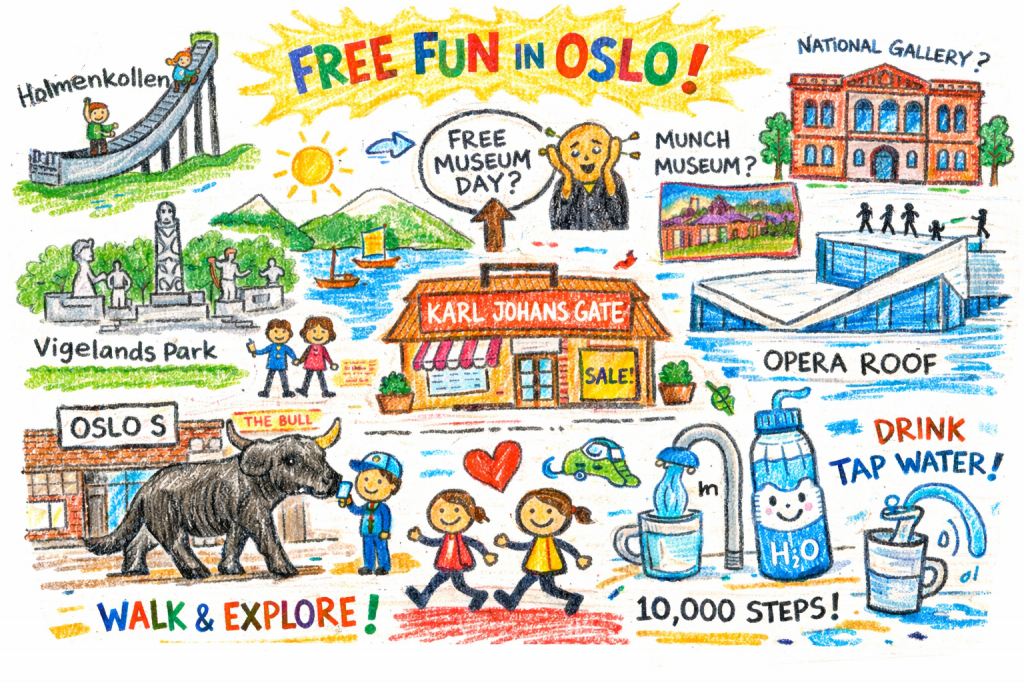
But here is the plot twist: Oslo is also a city that loves “Free.” Because Norwegians value the outdoors and public access (a concept known as allemannsretten), you can actually have a world-class vacation here without needing to auction off a vital organ.

If you’re a budget-conscious traveler, Oslo isn’t a trap; it’s a challenge. Here is how to conquer it.


1. The Great Outdoors: Nature’s Free Gift (Since 10,000 BC)

In many cities, the “free” stuff is just the stuff nobody wanted to pay for. In Oslo, the free stuff is the highlight.

Vigelandsparken (The Park of Naked, Grumpy People)

Vigelandsparken is the world’s largest sculpture park made by a single artist, and it costs exactly zero NOK to enter. It features over 200 bronze and granite figures by Gustav Vigeland. You’ve probably seen the “Angry Boy” (Sinnataggen) on Instagram, but seeing it in person—surrounded by hundreds of other naked, wrestling, and flying humans—is a trip.

  • Budget Tip: Walking the full length of the park and its rose gardens will easily net you 5,000 steps. It’s a massive outdoor gallery that doesn’t close.

Holmenkollen: Views Without the Price Tag

While the Ski Museum and the elevator to the top of the jump cost money, walking around Holmenkollen is totally free. The area offers some of the most spectacular views of the Oslofjord. You can stand at the base of the jump, feel the sheer scale of the engineering, and hike the surrounding trails without spending a dime. Just don’t try to walk there from the city center unless you want your legs to file a formal complaint with the UN.

Window Shopping and Bull Rubbing

Strolling down Karl Johans gate is the classic Oslo experience. You can see the Parliament (Stortinget), the National Theatre, and the Royal Palace gardens. While you’re near the Central Station, make sure to take a photo with the giant bronze tiger or the bull statue. It’s the law. (Okay, it’s not the law, but your camera roll demands it.)


2. Museums in Oslo: Free or Not?

This is where things get tricky. Oslo’s museums are world-class, but they aren’t always wallet-friendly.

  • The National Museum: Usually requires a ticket, but check their website for specific evening events or occasional free entry for students or youth. It houses The Scream, which is a fitting painting for someone looking at their receipt after a night out in Oslo.
  • The Munch Museum: Generally paid, but they sometimes offer “Late Night” events or specific time slots with reduced or free entry for certain demographics.
  • Free Museums: There aren’t many “always free” museums like in London, but keep an eye on the Intercultural Museum or small local galleries in the Grünerløkka district.

Compared to Ljubljana on a budget, where you can live like royalty on a peasant’s wage, Oslo requires more strategic planning. In Eastern Europe, you expect cheap; in Oslo, you expect financial pain. But by hitting the outdoor sights, you bridge that gap.


3. The Oslo Opera House: A Free Cultural Hack

If there is one “must-do” in Oslo that feels illegal because it’s so good and yet free, it’s the Oslo Opera House.

The architects (Snøhetta) designed the building so you can literally walk on the roof. It’s a white marble slopescape that rises out of the fjord. You get a panoramic view of the city, the “Barcode” skyline, and the water.

The Hack: You can also walk into the lobby for free. The woodwork and architecture inside are stunning. You don’t need a €100 ticket to a Wagner opera to enjoy the vibe—you just need a pair of shoes and a sense of wonder.


4. Walking = Saving (The Math of Survival)

Every time you choose to walk instead of taking a tram or a bus, you’re essentially “earning” about 40 NOK.

As we’ve discussed before, walking in Oslo is highly doable because the city center is remarkably compact.

  • Central Station to the Opera House: 6 minutes.
  • Opera House to Aker Brygge: 15 minutes.
  • Aker Brygge to the Royal Palace: 12 minutes.

If you exceed 10,000 steps a day, you aren’t just getting fit; you’re saving enough money to perhaps—just perhaps—afford a beer at the end of the day. Your legs might complain, but your bank account will be singing.


5. Drink Water, Not Your Budget

If you buy a bottle of water in an Oslo convenience store, you have officially failed “Budgeting 101.”

Norway has some of the cleanest, most delicious tap water on the planet. Asking for “Vann fra springen” (tap water) in a restaurant is free and expected. Refilling your own bottle from the hotel sink is even better.

People often ask if Oslo tap water is safe, and the answer is a resounding “Yes.” It’s cleaner than most bottled water sold in other countries. By skipping the plastic bottles, you’re saving roughly 30-40 NOK per refill. Over a weekend, that’s a free meal.


6. Cheap Activities in Oslo: The Waterfront and Beyond

If you’re looking for “this is actually amazing for €0” moments, head to the Aker Brygge and Tjuvholmen waterfront.

  • The Sculpture Park at Tjuvholmen: Right next to the Astrup Fearnley Museum (which is paid), there is a small, free outdoor sculpture park by the water.
  • Sørenga Seawater Pool: In the summer, you can swim for free at Sørenga. It’s a floating park with wooden decks and a view of the Opera House. It’s the ultimate “I’m in a rich city but I’m not paying for it” experience.

Conclusion: Oslo Doesn’t Have to Be a Financial Horror Movie

Is Oslo expensive? Yes. Will a slice of pizza sometimes make you weep? Probably.

But with a pair of sturdy walking shoes, a reusable water bottle, and a focus on the city’s incredible public spaces, you can experience the best of Norway without going bankrupt. Oslo is a city designed to be lived in, and fortunately for us, the best parts—the fjord, the architecture, the parks, and the fresh air—don’t come with a price tag.
Walking in Oslo: Can You Really Explore Norway’s Capital on Foot (or Will Your Legs File a Complaint?)

So, you’re headed to Oslo. You’ve seen the photos of the glass-and-marble Opera House, the Viking vibes, and the lush greenery. Now comes the logistical panic: Is Oslo walkable? Or are you going to end up as a cautionary tale, found shivering by a fjord because you thought you could “just nip over” to a ski jump on foot?

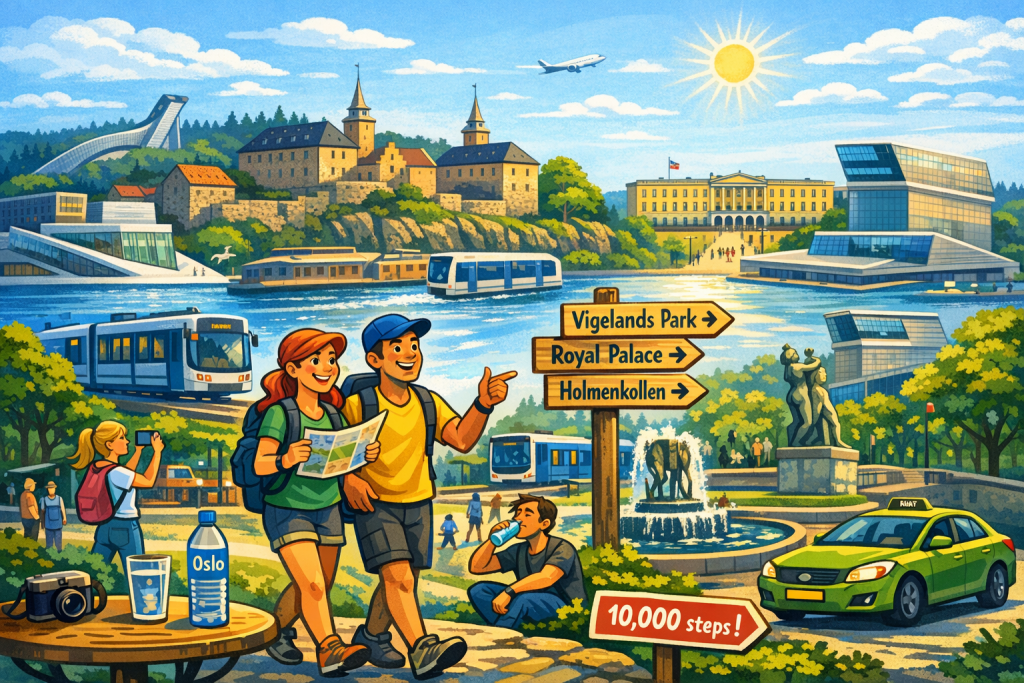
The short answer is: Yes, Oslo is incredibly walkable. In fact, it’s one of the most pedestrian-friendly capitals in Europe. But before you lace up your sneakers and decide to conquer the city like a modern-day Leif Erikson, there are a few things your calves deserve to know.


The “Golden Circle”: What You Actually Can Walk

If you are staying in the city center (Sentrum), your step counter is going to love you, but your legs won’t necessarily go on strike. Oslo is compact, and many of its “must-see” landmarks are clustered together like penguins in a snowstorm.

Realistic Walking Distances for Normal Humans

FromToDist.Time (Approx.)The Reality Check
Oslo Central StationRoyal Palace1.3 km15–20 minsA straight shot up Karl Johans gate. Great for people-watching.
City CenterAker Brygge800 m10 minsTotally flat. Perfect for a breezy harbor stroll.
City CenterAkershus Fortress900 m12 minsSlight incline, but the medieval views are worth the burn.
Central StationOpera House500 m6 minsPractically next door. You can walk on the roof!
Opera HouseMunch Museum400 m5 minsYou’re essentially just walking around the corner in the Bjørvika district.

As you can see, the “Big Hits” of downtown Oslo are easily reachable without ever touching a ticket machine. Walking from the Opera House to the Munch Museum is barely a stroll; it’s more of a transition between two architectural masterpieces.


The “Maybe Take the Tram” Zone: Vigeland Park

Once you decide to head west to see the famous grumpy baby statue at Vigelands Park, the conversation changes.

  • The Walk: From the Royal Palace to Vigeland Park is about 2.2 km (roughly 30 minutes).
  • The Trap: Many tourists forget that Vigeland Park itself is massive. Walking to the park is one thing; walking inside the park to see all 212 sculptures can easily add another 3,000 to 5,000 steps to your day.

If you’re already feeling the pinch in your arches, take the Line 12 Tram. It drops you right at the gates, saving your energy for the actual sightseeing.


Terrain, Comfort, and “The Barcelona Comparison”

Unlike some European cities that feel like a never-ending stairmaster (looking at you, Lisbon), central Oslo is relatively flat. The pavements are wide, well-maintained, and mostly pedestrianized in the shopping districts.

One major perk of walking in Oslo is the temperature. If you’ve ever attempted a mid-July stroll down Barcelona’s La Rambla, you know the “La Rambla-style sweat marathon” well. In Oslo, even the peak of summer usually hovers around a pleasant 20°C to 23°C. You can explore the city without feeling like you’re being roasted in a Viking longboat.

Pro-Tip: Wear Real Shoes

Norway is the land of “practicality over fashion.” While you’ll see locals looking stylish, they are likely wearing high-quality sneakers or boots. Leave the stilettos for a fancy dinner in Aker Brygge; the cobblestones near Akershus Fortress have a personal vendetta against thin heels.


The “Viking Reboot”: Why You Shouldn’t Walk to Holmenkollen

At some point, you will look at a map, see the Holmenkollen Ski Jump perched majestically on a hill, and think, “I can walk that. It looks close.”

Stop right there.

Walking to Holmenkollen from the city center is an 8 km uphill trek that rises hundreds of meters above sea level. Unless you are training for a “Viking Reboot” reality show or enjoy the sensation of your lungs exiting your chest, take the Metro (T-bane) Line 1. It’s a scenic 20-minute ride that does all the climbing for you, leaving you with fresh legs to enjoy the panoramic views of the fjord.


When to Stop Walking: Oslo Public Transport & Taxis

Oslo’s public transport system (Ruter) is a well-oiled machine. It consists of buses, trams, the metro, and even ferries to the islands.

  • The App: Download the Ruter app. You can’t buy tickets with cash on board.
  • Pricing: A single ticket costs around 40–50 NOK and is valid for an hour across all transport types. If you plan on doing more than three trips a day, a 24-hour pass is a steal.
  • The Taxi Reality: A word of warning—Oslo is not a “budget taxi paradise.” Taking a taxi for a 5-minute drive can easily cost you the price of a decent lunch. Use them sparingly, perhaps only when it’s raining sideways or you’ve bought too many Norwegian sweaters.

Hydration: Don’t Buy the Bottled Water!

You’re going to be hitting a high step count, which means you need to stay hydrated. Here is the best advice you’ll get all day: Do not buy bottled water in stores.

Oslo has some of the cleanest, crispest, and most delicious tap water in the world. Buying a plastic bottle of water in a Norwegian supermarket is often cited as the stupidest question on earth because the stuff coming out of the faucet is arguably better.

Plan of Action: Bring a reusable bottle, fill it up at your hotel, and refill it at any public fountain or sink. Your wallet and the environment will both thank you.


The Verdict: Is Oslo Walkable?

Absolutely. Oslo is a dream for those who like to explore at a human pace. You can start your morning at the Opera House, wander past the Akershus Fortress, grab lunch at Aker Brygge, and finish with a stroll through the Royal Palace gardens—all without ever needing a vehicle.

However, Oslo is “walkable, but not naïve.” Know your limits:

  1. Walk the city center and the waterfront.
  2. Tram to Vigeland Park if you’re feeling lazy.
  3. Metro to Holmenkollen (unless you’re a mountain goat).

By mixing a bit of common sense with a sturdy pair of shoes, you’ll find that exploring Oslo on foot isn’t just possible—it’s the best way to see the city.

The Stupidest Question on Earth — Is Oslo Tap Water Safe?

Let’s be real: if you’re currently standing in the middle of Karl Johans gate, clutching a plastic bottle of water and frantically Googling whether it’s safe to drink from the sink in your Airbnb, you’ve officially asked the stupidest question on Earth. We get it. You’re a traveler. You’ve been to places where the tap water smells like a YMCA swimming pool or, worse, comes with a side of “don’t-leave-the-bathroom-for-three-days.” But this is Norway. This is the land of $12 lattes, electric ferries, and a sovereign wealth fund so large it could probably buy the moon. In a country where the infrastructure is cleaner than a Swedish minimalist’s living room, do you really think they’re slacking on the H2O?

Is Oslo Tap Water Safe? (The Short, Sassy Answer)

Yes. A thousand times, yes.

According to the official Oslo Water Board (check out their Drikkevannskvalitet page for the nerdy details), the drinking water in Oslo is of exceptionally high quality. In fact, unless the municipal authorities send a frantic SMS to every phone in the city (which they actually do if there’s a rare pipe break), you can assume the stuff coming out of your faucet is cleaner than most bottled brands.

In Oslo, drinking bottled water isn’t just unnecessary; it’s a weirdly expensive hobby. It’s like buying a canned “Mountain Air” spray when you’re standing at the top of a fjord.


Where Does This Liquid Gold Come From?

Oslo doesn’t just pull its water from some random borehole. About 90% of the city’s supply comes from Maridalsvannet, a massive, pristine lake nestled in the forest just north of the city center.

The lake is strictly protected—no swimming, no fishing, and definitely no jet skis. The water is treated at the state-of-the-art Oset treatment plant using a sophisticated process of micro-filtration and UV irradiation to kill off any uninvited microbial guests. Because the raw water is so clean to begin with, the treatment is gentle, leaving you with a crisp, neutral taste that doesn’t scream “chemistry lab.”

What’s (Not) in the Water?

If you’re used to the heavy, mineral-rich “hard” water of London or the chlorinated tang of New York, Oslo’s tap water will be a revelation.

  • Chlorine: While many cities dump chlorine in like they’re prepping a public pool, Oslo uses very little (if any) in its daily supply. You won’t get that bleach aroma here.
  • Hardness: Oslo’s water is soft. This means your hair will feel amazing after a shower, and you won’t find white crusty minerals growing on the bottom of the kettle.
  • Chloride & Minerals: The levels of chloride and other minerals are incredibly low—well within strict health limits. It’s basically just pure, unadulterated hydration.

Tap Water vs. Bottled Water: The Great Norwegian Rip-off

Norway is many things, but “cheap” is not one of them. If you walk into a Narvesen or 7-Eleven, you can expect to pay anywhere from 25 to 40 NOK (€2.20 – €3.50) for a standard 0.5L bottle of water.

Then there’s VOSS. We’ve all seen the sleek, glass cylinders in fancy hotels. People pay a premium for VOSS because it looks like it was harvested from a glacier by a high-fashion model. In reality? While VOSS comes from a different source in Southern Norway, the “regular” tap water in Oslo is chemically very similar. You’re essentially paying €5 for a very pretty glass tube. Save your money for a reindeer taco instead.

Travel Tips: Drink Like a Local

If you want to blend in and save your precious Norwegian Krone, follow the local code:

  1. Bring a Refillable Bottle: This is the #1 rule for any Oslo Guide enthusiast.
  2. Top Up Everywhere: Public fountains are common, and most cafes or restaurants will happily let you refill your bottle.
  3. Ask for “Vann fra kranen”: If you’re at a restaurant, don’t just ask for “water” (they might bring you an expensive bottle). Ask for tap water—it’s free, ice-cold, and perfectly delicious.

The Final Verdict

If your biggest stress during your trip to Norway is whether the tap water will hurt you, congratulations: you are winning at life. You are in one of the safest, cleanest, and most functional cities on the planet.

So, put down the expensive plastic bottle, find the nearest faucet, and drink up. The water is great, it’s free, and it leaves you with more money to spend on things that actually matter—like trying to figure out why a beer costs 120 NOK.

Bicycling in Oslo – Do’s and Don’ts

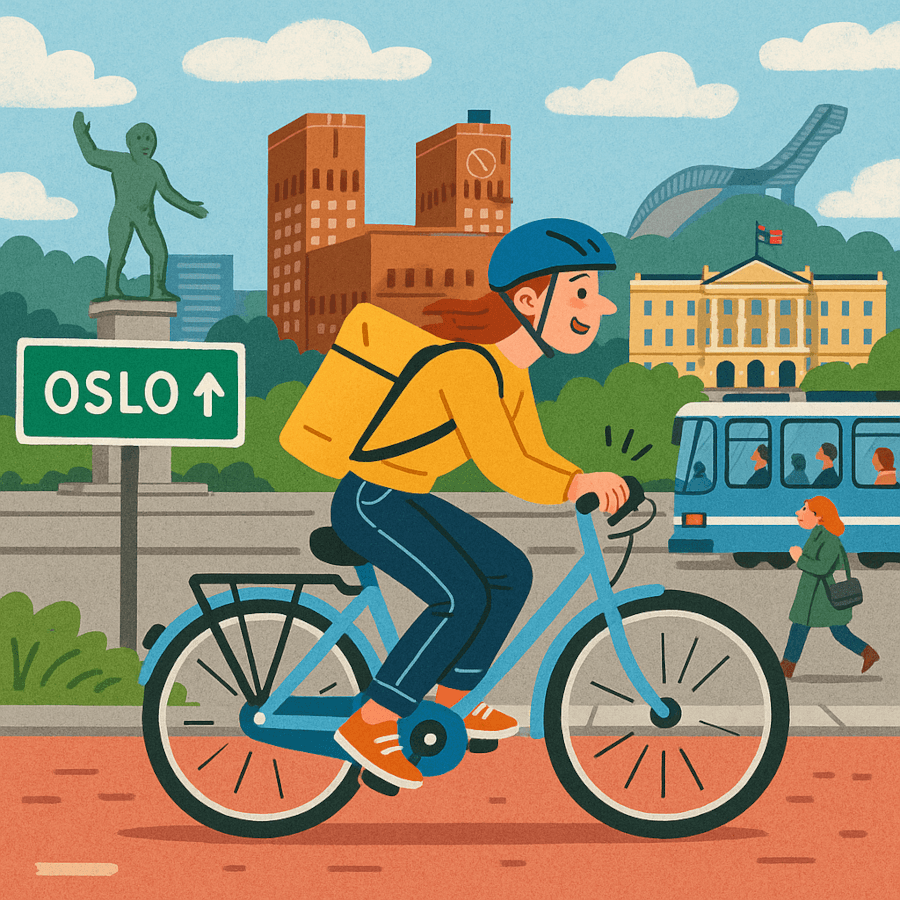
Oslo – the charming capital of Norway, home to trolls, fjords, royals, and a growing number of people who like to get around on two wheels. Whether you’re a visitor trying to soak up the sights or a newcomer wondering if you’ll survive the winter on a bike, this guide is here to tell you everything you need to know about cycling in Oslo – the good, the steep, and the occasionally slippery.


How many people actually bike in Oslo?

Oslo has around 700,000 residents, and cycling is becoming more and more popular every year. Around 12–15% of locals use a bike daily, especially for commuting. That’s not quite Amsterdam levels, but it’s getting there. If you’re pedaling through the city, you’re joining a growing group of Oslo-folk who prefer fresh air and pedal power to buses and Teslas.


Is it safe to bike in Oslo?

Short answer: yes. Longer answer: yes, but pay attention. Oslo has made big investments in cycling infrastructure, including separated bike lanes, better signage, and bike-friendly intersections. But this is still a city with trams (don’t get stuck in those tracks), unpredictable pedestrians, and the occasional SUV that thinks it owns the road. Wear a helmet, stay alert, and ring your bell like your life depends on it – sometimes it does.


What should you know as a tourist or newbie cyclist?

First rule: don’t speed on sidewalks. Pedestrians in Oslo are peace-loving beings who do not expect a blur of Lycra zooming past their coffee. Stick to bike lanes and roads. Follow traffic lights – red means stop, even if you’re on a trendy city bike.

Also, use lights at night. Police occasionally do surprise “light checks,” and you don’t want to get fined for being a shadowy figure in traffic. And yes – it’s totally legal (and normal) to bring your bike on the metro or train if needed.


What about the weather – snow, ice, wind, heat?!

Welcome to Norway! Weather is part of the fun (or the pain). Yes, people bike all year round. Hardcore locals use studded tires, waterproof gloves, and sheer Nordic determination to cycle through snow and ice. But if you’re not built like a Viking, it’s totally okay to switch to public transport during winter.

Summers are awesome for biking – long days, fresh air, and plenty of places to park. Spring and autumn can be a mixed bag, so keep an eye on the forecast. And yes, Oslo occasionally gets heat waves, which means 24°C and everyone melting dramatically.

oslo sykkel

Are there enough bike lanes in Oslo?

Absolutely. Oslo has over 230 km of cycling infrastructure, and it’s improving every year. There are dedicated bike highways, scenic routes through parks, and flat stretches along the fjord. The city even has a bike lane map if you want to plan your route like a pro. If you’re ever confused, just follow the locals – they usually know the best shortcuts.


Is Oslo flat or hilly?

It depends. Downtown Oslo is relatively flat – perfect for easy rides. But if you head west or north, you’ll start seeing words like “-kollen” (hill) or “-åsen” (ridge), and your thighs will feel it. If you’re aiming for places like Holmenkollen, expect a workout. Electric bikes exist for a reason – and you might want one.


Is bike theft a thing in Oslo?

Yes, unfortunately. While it’s not the worst in Europe, bike theft does happen. Use a solid lock – preferably a heavy-duty U-lock. Always lock the frame and front wheel, especially in the city center or near bars and cafés. Don’t leave your expensive bike outside overnight unless you want to post a sad photo on Reddit asking for help.


Are there bike rentals available?

Yes! Oslo City Bikes (Bysykkel) are everywhere and super easy to use. Just download the app, unlock a bike, and ride. It costs around 49 NOK for a day or 119 NOK for a week. You can use a bike for up to 60 minutes at a time, then swap it for another. Great for tourists and spontaneous pedalers. There are also electric bikes available for rent – because sometimes Oslo’s hills win.


How long does it take to bike to major attractions?

Let’s say you’re standing at Oslo Central Station (Oslo S) with a bike and a sense of adventure. Here’s how long it’ll take you to cycle to popular spots:

  • Munch Museum (Bjørvika): 5–7 minutes. It’s basically next door. You’ll get there before your playlist hits the chorus.
  • The Royal Palace: 10 minutes. A slight uphill ride, but nothing you can’t handle – unless you’re very hungover.
  • Aker Brygge: 10–12 minutes. Flat and breezy, just watch out for selfie-takers and seagulls.
  • Vigeland Park: 20–25 minutes. A scenic ride through neighborhoods and into the park. Expect mild hills and lots of squirrels.
  • Holmenkollen Ski Jump: 45–60 minutes. Straight uphill. You’ll curse, sweat, and consider turning back at least twice. But when you reach the top – oh boy, the view is worth it. Just bring snacks. And maybe oxygen.

What are the top do’s and don’ts for biking in Oslo?

DO:

  • Wear a helmet – not mandatory, but highly recommended.
  • Use a bell – Norwegians respect it, and it avoids drama.
  • Thank people when they move for you. It’s polite (and very Norwegian).
  • Check the weather before you go out. Oslo skies are moody.
  • Try Frogner Park for a peaceful, art-filled ride.

DON’T:

  • Don’t ride on pedestrian-only sidewalks. People will stare you down.
  • Don’t ride in tram tracks – your wheels will get stuck.
  • Don’t block entrances when parking. That’s a fast way to make enemies.
  • Don’t assume cars always see you. Oslo drivers are improving, but be alert.
  • Don’t forget your lights at night. Oslo gets dark in winter.

So, should you bike in Oslo?

YES! Oslo is a great city for biking – compact, scenic, and increasingly bike-friendly. It’s faster than walking, cheaper than taxis, and way more fun than sitting in traffic. Whether you’re riding for fun, fitness, or just to get from point A to point B, cycling in Oslo is a great way to explore the city.

So grab a helmet, pump those tires, and hit the bike lanes – the city is waiting, two wheels at a time!


Happy cycling – and may your route be mostly downhill! ?‍♂️✨