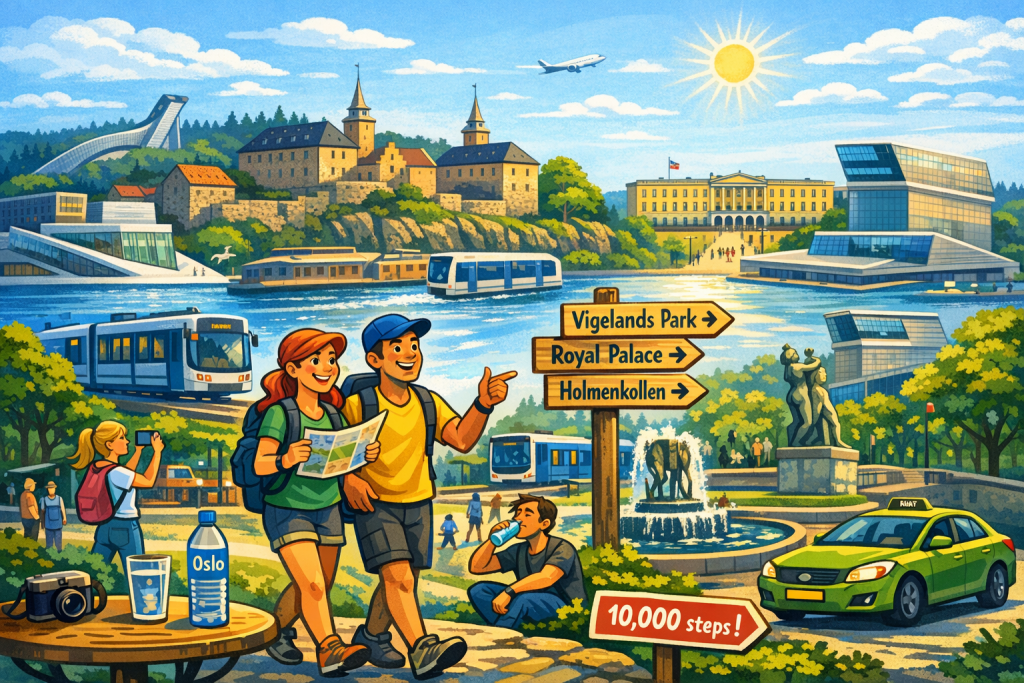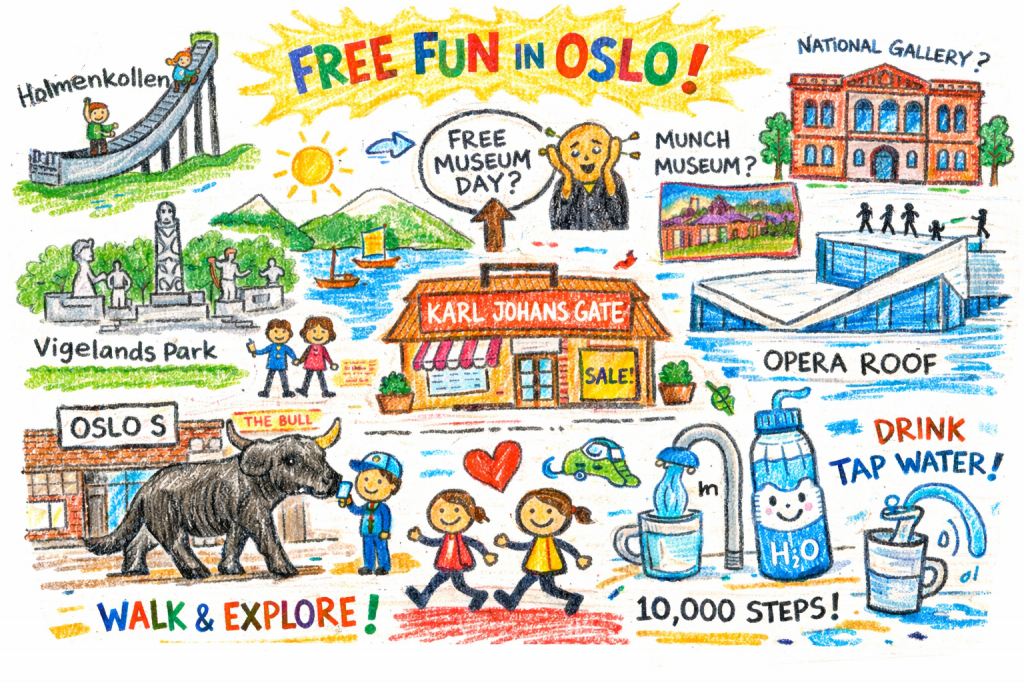
Let’s address the polar bear in the room: Oslo is expensive. It’s the kind of expensive that makes you check your bank balance after buying a latte just to make sure the transaction didn’t trigger a fraud alert. We’ve all heard the legends of the €10 beer and the sandwich that costs as much as a small television.
But here is the plot twist: Oslo is also a city that loves “Free.” Because Norwegians value the outdoors and public access (a concept known as allemannsretten), you can actually have a world-class vacation here without needing to auction off a vital organ.
If you’re a budget-conscious traveler, Oslo isn’t a trap; it’s a challenge. Here is how to conquer it.
1. The Great Outdoors: Nature’s Free Gift (Since 10,000 BC)
In many cities, the “free” stuff is just the stuff nobody wanted to pay for. In Oslo, the free stuff is the highlight.
Vigelandsparken (The Park of Naked, Grumpy People)
Vigelandsparken is the world’s largest sculpture park made by a single artist, and it costs exactly zero NOK to enter. It features over 200 bronze and granite figures by Gustav Vigeland. You’ve probably seen the “Angry Boy” (Sinnataggen) on Instagram, but seeing it in person—surrounded by hundreds of other naked, wrestling, and flying humans—is a trip.
- Budget Tip: Walking the full length of the park and its rose gardens will easily net you 5,000 steps. It’s a massive outdoor gallery that doesn’t close.
Holmenkollen: Views Without the Price Tag
While the Ski Museum and the elevator to the top of the jump cost money, walking around Holmenkollen is totally free. The area offers some of the most spectacular views of the Oslofjord. You can stand at the base of the jump, feel the sheer scale of the engineering, and hike the surrounding trails without spending a dime. Just don’t try to walk there from the city center unless you want your legs to file a formal complaint with the UN.
Window Shopping and Bull Rubbing
Strolling down Karl Johans gate is the classic Oslo experience. You can see the Parliament (Stortinget), the National Theatre, and the Royal Palace gardens. While you’re near the Central Station, make sure to take a photo with the giant bronze tiger or the bull statue. It’s the law. (Okay, it’s not the law, but your camera roll demands it.)
2. Museums in Oslo: Free or Not?
This is where things get tricky. Oslo’s museums are world-class, but they aren’t always wallet-friendly.
- The National Museum: Usually requires a ticket, but check their website for specific evening events or occasional free entry for students or youth. It houses The Scream, which is a fitting painting for someone looking at their receipt after a night out in Oslo.
- The Munch Museum: Generally paid, but they sometimes offer “Late Night” events or specific time slots with reduced or free entry for certain demographics.
- Free Museums: There aren’t many “always free” museums like in London, but keep an eye on the Intercultural Museum or small local galleries in the Grünerløkka district.
Compared to Ljubljana on a budget, where you can live like royalty on a peasant’s wage, Oslo requires more strategic planning. In Eastern Europe, you expect cheap; in Oslo, you expect financial pain. But by hitting the outdoor sights, you bridge that gap.
3. The Oslo Opera House: A Free Cultural Hack
If there is one “must-do” in Oslo that feels illegal because it’s so good and yet free, it’s the Oslo Opera House.
The architects (Snøhetta) designed the building so you can literally walk on the roof. It’s a white marble slopescape that rises out of the fjord. You get a panoramic view of the city, the “Barcode” skyline, and the water.
The Hack: You can also walk into the lobby for free. The woodwork and architecture inside are stunning. You don’t need a €100 ticket to a Wagner opera to enjoy the vibe—you just need a pair of shoes and a sense of wonder.
4. Walking = Saving (The Math of Survival)
Every time you choose to walk instead of taking a tram or a bus, you’re essentially “earning” about 40 NOK.
As we’ve discussed before, walking in Oslo is highly doable because the city center is remarkably compact.
- Central Station to the Opera House: 6 minutes.
- Opera House to Aker Brygge: 15 minutes.
- Aker Brygge to the Royal Palace: 12 minutes.
If you exceed 10,000 steps a day, you aren’t just getting fit; you’re saving enough money to perhaps—just perhaps—afford a beer at the end of the day. Your legs might complain, but your bank account will be singing.
5. Drink Water, Not Your Budget
If you buy a bottle of water in an Oslo convenience store, you have officially failed “Budgeting 101.”
Norway has some of the cleanest, most delicious tap water on the planet. Asking for “Vann fra springen” (tap water) in a restaurant is free and expected. Refilling your own bottle from the hotel sink is even better.
People often ask if Oslo tap water is safe, and the answer is a resounding “Yes.” It’s cleaner than most bottled water sold in other countries. By skipping the plastic bottles, you’re saving roughly 30-40 NOK per refill. Over a weekend, that’s a free meal.
6. Cheap Activities in Oslo: The Waterfront and Beyond
If you’re looking for “this is actually amazing for €0” moments, head to the Aker Brygge and Tjuvholmen waterfront.
- The Sculpture Park at Tjuvholmen: Right next to the Astrup Fearnley Museum (which is paid), there is a small, free outdoor sculpture park by the water.
- Sørenga Seawater Pool: In the summer, you can swim for free at Sørenga. It’s a floating park with wooden decks and a view of the Opera House. It’s the ultimate “I’m in a rich city but I’m not paying for it” experience.
Conclusion: Oslo Doesn’t Have to Be a Financial Horror Movie
Is Oslo expensive? Yes. Will a slice of pizza sometimes make you weep? Probably.
But with a pair of sturdy walking shoes, a reusable water bottle, and a focus on the city’s incredible public spaces, you can experience the best of Norway without going bankrupt. Oslo is a city designed to be lived in, and fortunately for us, the best parts—the fjord, the architecture, the parks, and the fresh air—don’t come with a price tag.