Blog

Walking in Oslo: Can You Really Explore Norway’s Capital on Foot (or Will Your Legs File a Complaint?)

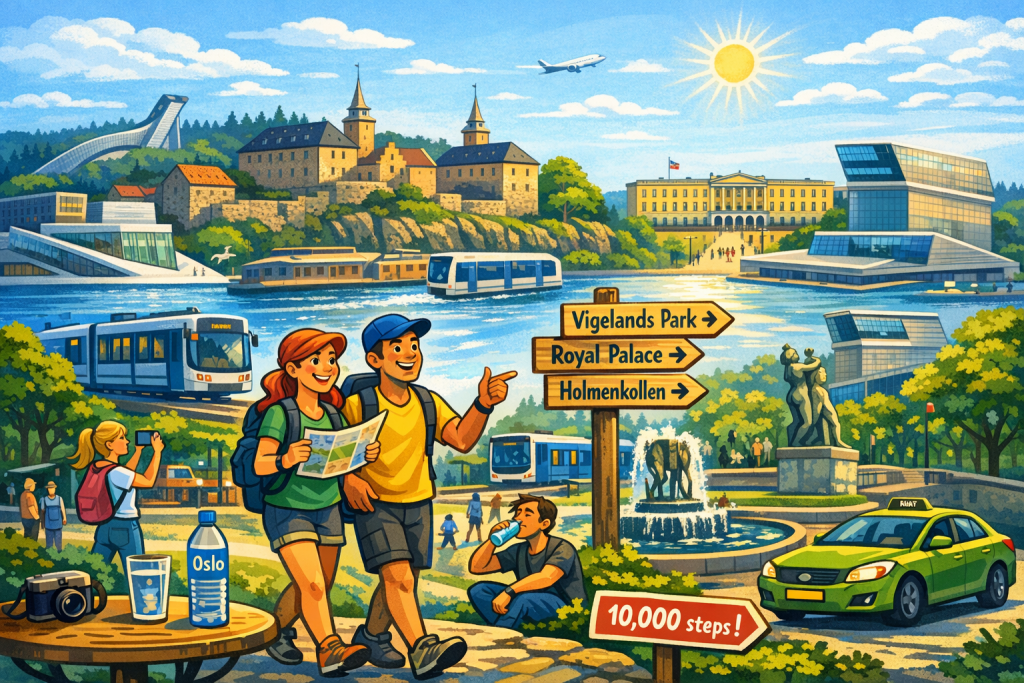
So, you’re headed to Oslo. You’ve seen the photos of the glass-and-marble Opera House, the Viking vibes, and the lush greenery. Now comes the logistical panic: Is Oslo walkable? Or are you going to end up as a cautionary tale, found shivering by a fjord because you thought you could “just nip over” to a ski jump on foot?

The short answer is: Yes, Oslo is incredibly walkable. In fact, it’s one of the most pedestrian-friendly capitals in Europe. But before you lace up your sneakers and decide to conquer the city like a modern-day Leif Erikson, there are a few things your calves deserve to know.


The “Golden Circle”: What You Actually Can Walk

If you are staying in the city center (Sentrum), your step counter is going to love you, but your legs won’t necessarily go on strike. Oslo is compact, and many of its “must-see” landmarks are clustered together like penguins in a snowstorm.

Realistic Walking Distances for Normal Humans

FromToDist.Time (Approx.)The Reality Check
Oslo Central StationRoyal Palace1.3 km15–20 minsA straight shot up Karl Johans gate. Great for people-watching.
City CenterAker Brygge800 m10 minsTotally flat. Perfect for a breezy harbor stroll.
City CenterAkershus Fortress900 m12 minsSlight incline, but the medieval views are worth the burn.
Central StationOpera House500 m6 minsPractically next door. You can walk on the roof!
Opera HouseMunch Museum400 m5 minsYou’re essentially just walking around the corner in the Bjørvika district.

As you can see, the “Big Hits” of downtown Oslo are easily reachable without ever touching a ticket machine. Walking from the Opera House to the Munch Museum is barely a stroll; it’s more of a transition between two architectural masterpieces.


The “Maybe Take the Tram” Zone: Vigeland Park

Once you decide to head west to see the famous grumpy baby statue at Vigelands Park, the conversation changes.

  • The Walk: From the Royal Palace to Vigeland Park is about 2.2 km (roughly 30 minutes).
  • The Trap: Many tourists forget that Vigeland Park itself is massive. Walking to the park is one thing; walking inside the park to see all 212 sculptures can easily add another 3,000 to 5,000 steps to your day.

If you’re already feeling the pinch in your arches, take the Line 12 Tram. It drops you right at the gates, saving your energy for the actual sightseeing.


Terrain, Comfort, and “The Barcelona Comparison”

Unlike some European cities that feel like a never-ending stairmaster (looking at you, Lisbon), central Oslo is relatively flat. The pavements are wide, well-maintained, and mostly pedestrianized in the shopping districts.

One major perk of walking in Oslo is the temperature. If you’ve ever attempted a mid-July stroll down Barcelona’s La Rambla, you know the “La Rambla-style sweat marathon” well. In Oslo, even the peak of summer usually hovers around a pleasant 20°C to 23°C. You can explore the city without feeling like you’re being roasted in a Viking longboat.

Pro-Tip: Wear Real Shoes

Norway is the land of “practicality over fashion.” While you’ll see locals looking stylish, they are likely wearing high-quality sneakers or boots. Leave the stilettos for a fancy dinner in Aker Brygge; the cobblestones near Akershus Fortress have a personal vendetta against thin heels.


The “Viking Reboot”: Why You Shouldn’t Walk to Holmenkollen

At some point, you will look at a map, see the Holmenkollen Ski Jump perched majestically on a hill, and think, “I can walk that. It looks close.”

Stop right there.

Walking to Holmenkollen from the city center is an 8 km uphill trek that rises hundreds of meters above sea level. Unless you are training for a “Viking Reboot” reality show or enjoy the sensation of your lungs exiting your chest, take the Metro (T-bane) Line 1. It’s a scenic 20-minute ride that does all the climbing for you, leaving you with fresh legs to enjoy the panoramic views of the fjord.


When to Stop Walking: Oslo Public Transport & Taxis

Oslo’s public transport system (Ruter) is a well-oiled machine. It consists of buses, trams, the metro, and even ferries to the islands.

  • The App: Download the Ruter app. You can’t buy tickets with cash on board.
  • Pricing: A single ticket costs around 40–50 NOK and is valid for an hour across all transport types. If you plan on doing more than three trips a day, a 24-hour pass is a steal.
  • The Taxi Reality: A word of warning—Oslo is not a “budget taxi paradise.” Taking a taxi for a 5-minute drive can easily cost you the price of a decent lunch. Use them sparingly, perhaps only when it’s raining sideways or you’ve bought too many Norwegian sweaters.

Hydration: Don’t Buy the Bottled Water!

You’re going to be hitting a high step count, which means you need to stay hydrated. Here is the best advice you’ll get all day: Do not buy bottled water in stores.

Oslo has some of the cleanest, crispest, and most delicious tap water in the world. Buying a plastic bottle of water in a Norwegian supermarket is often cited as the stupidest question on earth because the stuff coming out of the faucet is arguably better.

Plan of Action: Bring a reusable bottle, fill it up at your hotel, and refill it at any public fountain or sink. Your wallet and the environment will both thank you.


The Verdict: Is Oslo Walkable?

Absolutely. Oslo is a dream for those who like to explore at a human pace. You can start your morning at the Opera House, wander past the Akershus Fortress, grab lunch at Aker Brygge, and finish with a stroll through the Royal Palace gardens—all without ever needing a vehicle.

However, Oslo is “walkable, but not naïve.” Know your limits:

  1. Walk the city center and the waterfront.
  2. Tram to Vigeland Park if you’re feeling lazy.
  3. Metro to Holmenkollen (unless you’re a mountain goat).

By mixing a bit of common sense with a sturdy pair of shoes, you’ll find that exploring Oslo on foot isn’t just possible—it’s the best way to see the city.
The Stupidest Question on Earth — Is Oslo Tap Water Safe?

Let’s be real: if you’re currently standing in the middle of Karl Johans gate, clutching a plastic bottle of water and frantically Googling whether it’s safe to drink from the sink in your Airbnb, you’ve officially asked the stupidest question on Earth. We get it. You’re a traveler. You’ve been to places where the tap water smells like a YMCA swimming pool or, worse, comes with a side of “don’t-leave-the-bathroom-for-three-days.” But this is Norway. This is the land of $12 lattes, electric ferries, and a sovereign wealth fund so large it could probably buy the moon. In a country where the infrastructure is cleaner than a Swedish minimalist’s living room, do you really think they’re slacking on the H2O?

Is Oslo Tap Water Safe? (The Short, Sassy Answer)

Yes. A thousand times, yes.

According to the official Oslo Water Board (check out their Drikkevannskvalitet page for the nerdy details), the drinking water in Oslo is of exceptionally high quality. In fact, unless the municipal authorities send a frantic SMS to every phone in the city (which they actually do if there’s a rare pipe break), you can assume the stuff coming out of your faucet is cleaner than most bottled brands.

In Oslo, drinking bottled water isn’t just unnecessary; it’s a weirdly expensive hobby. It’s like buying a canned “Mountain Air” spray when you’re standing at the top of a fjord.


Where Does This Liquid Gold Come From?

Oslo doesn’t just pull its water from some random borehole. About 90% of the city’s supply comes from Maridalsvannet, a massive, pristine lake nestled in the forest just north of the city center.

The lake is strictly protected—no swimming, no fishing, and definitely no jet skis. The water is treated at the state-of-the-art Oset treatment plant using a sophisticated process of micro-filtration and UV irradiation to kill off any uninvited microbial guests. Because the raw water is so clean to begin with, the treatment is gentle, leaving you with a crisp, neutral taste that doesn’t scream “chemistry lab.”

What’s (Not) in the Water?

If you’re used to the heavy, mineral-rich “hard” water of London or the chlorinated tang of New York, Oslo’s tap water will be a revelation.

  • Chlorine: While many cities dump chlorine in like they’re prepping a public pool, Oslo uses very little (if any) in its daily supply. You won’t get that bleach aroma here.
  • Hardness: Oslo’s water is soft. This means your hair will feel amazing after a shower, and you won’t find white crusty minerals growing on the bottom of the kettle.
  • Chloride & Minerals: The levels of chloride and other minerals are incredibly low—well within strict health limits. It’s basically just pure, unadulterated hydration.

Tap Water vs. Bottled Water: The Great Norwegian Rip-off

Norway is many things, but “cheap” is not one of them. If you walk into a Narvesen or 7-Eleven, you can expect to pay anywhere from 25 to 40 NOK (€2.20 – €3.50) for a standard 0.5L bottle of water.

Then there’s VOSS. We’ve all seen the sleek, glass cylinders in fancy hotels. People pay a premium for VOSS because it looks like it was harvested from a glacier by a high-fashion model. In reality? While VOSS comes from a different source in Southern Norway, the “regular” tap water in Oslo is chemically very similar. You’re essentially paying €5 for a very pretty glass tube. Save your money for a reindeer taco instead.

Travel Tips: Drink Like a Local

If you want to blend in and save your precious Norwegian Krone, follow the local code:

  1. Bring a Refillable Bottle: This is the #1 rule for any Oslo Guide enthusiast.
  2. Top Up Everywhere: Public fountains are common, and most cafes or restaurants will happily let you refill your bottle.
  3. Ask for “Vann fra kranen”: If you’re at a restaurant, don’t just ask for “water” (they might bring you an expensive bottle). Ask for tap water—it’s free, ice-cold, and perfectly delicious.

The Final Verdict

If your biggest stress during your trip to Norway is whether the tap water will hurt you, congratulations: you are winning at life. You are in one of the safest, cleanest, and most functional cities on the planet.

So, put down the expensive plastic bottle, find the nearest faucet, and drink up. The water is great, it’s free, and it leaves you with more money to spend on things that actually matter—like trying to figure out why a beer costs 120 NOK.

How to Watch NRK Live Stream from Abroad (Yes, Even When NRK Says “Nope”)

If you have ever spent a lonely evening in a hotel room in London or an apartment in New York, desperately craving a dose of Nytt på nytt, the soothing sounds of Sakte-TV, or the high-octane drama of a World Cup cross-country sprint, you know the pain. You open the NRK TV app, click play, and then it happens.

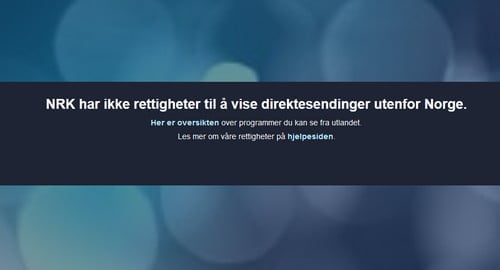
The “Blue Screen of Rejection.” The message that politely, yet firmly, informs you that “NRK har ikke rettigheter til å vise dette programmet utenfor Norge.” (NRK does not have the rights to show this program outside Norway).

It feels like a personal snub. You pay your taxes (or you’ve spent enough money on brown cheese to deserve a pass), yet NRK acts like you’re a stranger just because you crossed the border. But don’t pack your bags and head for Gardermoen just yet. You can bring a piece of Norway with you, wherever you are.


Why NRK Is Worth the Trouble

NRK isn’t just a TV channel; for many, it’s the digital heartbeat of Norway. Whether it’s the legendary coverage of the Winter and Summer Olympics, the FIFA World Cup, or the nail-biting excitement of the Biathlon World Championships, NRK is where Norway gathers.

Beyond sports, NRK produces some of the highest-quality drama and journalism in the world. From the groundbreaking teen realism of SKAM to the high-stakes financial thriller Exit, or the essential daily updates from Dagsrevyen, NRK provides a sense of home. For Norwegians abroad, it’s a way to keep the language alive; for Norway-lovers, it’s a window into the culture.

The problem is that “window” has a very thick, geo-blocked shutter.


The Quick Fix: How to Stream NRK Right Now

If the 50km cross-country race is starting in exactly four minutes and you don’t have time for a lecture on internet protocols, here is your “emergency” solution.

To bypass the block, you need a VPN that actually works with Norwegian streaming services. We recommend PureVPN for its speed and reliable Norwegian servers.

5 Steps to Watching NRK from Abroad:

  1. Visit the PureVPN website via this link: Get PureVPN Now.
  2. Purchase a subscription (they offer a 31-day money-back guarantee, so it’s risk-free).
  3. Download and install the app on your device (Phone, Tablet, or Laptop).
  4. Open the app and connect to a Norwegian server (usually located in Oslo).
  5. Open NRK TV (web or app) and start streaming like you’re sitting on your sofa in Grünerløkka.

The Science of “Nope”: Why NRK Blocks You

Why is NRK being so difficult? It’s not because they don’t like you. It’s all about licensing.

When NRK buys the rights to show the Olympics or a Hollywood movie, they usually only buy the rights to show it to people inside the borders of Norway. To enforce this, NRK uses a system called geo-blocking.

Every time you connect to the internet, your device is assigned an IP address. Think of this as your digital home address. If your IP address says “Barcelona” or “Tokyo,” NRK’s servers see that, realize you are outside the “safe zone,” and instantly trigger the error message. It’s cold, it’s robotic, and it’s incredibly annoying when you’re mid-season in your favorite show.


How a VPN Solves the Problem (The “VPN Tunnel”)

A VPN (Virtual Private Network) is essentially a digital disguise. When you use a VPN, you aren’t connecting directly to NRK. Instead, your internet traffic travels through a secure, encrypted “VPN tunnel” to a server located in another country—in this case, Norway.

When your traffic pops out of that server in Norway and heads over to NRK, the broadcaster looks at your request and thinks: “Ah, look at this person! They have a perfectly lovely Norwegian IP address. Welcome in!”

By using this method, you can effectively get a Norwegian IP address regardless of where you actually are in the physical world.


Why We Recommend PureVPN for NRK

Not all VPNs are created equal. Some are too slow for high-definition sports, and others are easily detected and blocked by NRK’s security systems.

PureVPN stands out for a few specific reasons:

  • Norwegian Server Density: They have dedicated servers in Oslo, which is crucial for a stable connection.
  • High Speed: Watching the Olympics in 480p is a tragedy. PureVPN offers the bandwidth needed for 4K and HD streaming.
  • Ease of Use: You don’t need to be a computer whiz. You click a button that says “Norway,” and you’re done.
  • Privacy: It uses high-level encryption, meaning your browsing remains private and secure from hackers on public Wi-Fi (like at airports or cafes).

Watching NRK from Anywhere: Barcelona to Tokyo

The beauty of this setup is that it makes borders irrelevant.

  • In Spain? You can watch the 17th of May celebrations live while sitting on the beach.
  • In the US? You can keep up with Mesternes Mester without waiting for clips to show up on YouTube.
  • In Asia? You can watch the morning news while everyone back home is sleeping.

It covers both Live Stream (live TV) and the entire On-Demand library. So, whether you want to watch the news as it happens or binge-watch a documentary series from three years ago, the VPN has you covered.


Is It Legal and Safe?

This is a common question. Using a VPN is completely legal in the vast majority of countries (including Norway, the EU, and the US). While using a VPN to bypass geo-blocks might technically go against the “Terms of Service” of some streaming platforms, it is not a criminal offense.

From a safety perspective, using a reputable VPN like PureVPN actually increases your security. It masks your real location and encrypts your data, which is a smart move whenever you are traveling and using unfamiliar Wi-Fi networks.


Final Thoughts: Bringing Home With You

NRK is more than just a broadcaster; for Norwegians and those who love Norway, it’s a piece of the national identity. It’s the sound of the commentators during a winter sports weekend, the familiar faces on the evening news, and the specific Norwegian humor that doesn’t quite translate anywhere else.

Being abroad shouldn’t mean being cut off from home. With a simple tool like a VPN, you can jump over the digital fences and stay connected to the culture, the language, and the sports that matter to you.

So, the next time NRK tells you “Nope,” you can just smile, click “Connect,” and enjoy the show.

Handball Euro 2026 near Oslo: Experience the Action Live at Unity Arena

January 2026 will be a huge month for sports fans in Norway. The European Men’s Handball Championship 2026 comes to Scandinavia, with matches hosted in Norway, Sweden, and Denmark—and for visitors to Oslo, this is a rare chance to experience elite international handball just minutes from the city center.

Norway’s group-stage matches will be played at Unity Arena, located west of Oslo. Whether you’re cheering for Norway, following one of the tournament favorites, or simply looking to soak up the atmosphere of a major European championship, this event promises speed, intensity, and unforgettable moments.


About the Men’s Handball Euro 2026

The Men’s Handball Euro 2026 takes place from 15 January to 1 February 2026 and features 24 of Europe’s strongest national teams. This will be the 17th edition of the tournament and also serves as a qualifier for the 2027 World Men’s Handball Championship, which adds extra pressure and drama from the very first match.

France enters the tournament as the defending European champion, while Denmark is widely considered the main favorite to lift the trophy. Norway is not ranked among the top medal contenders this time, but with home support behind them, the team will be eager to challenge stronger opponents and possibly spring a surprise.

If you want a deeper dive into the tournament structure, teams, and venues, you can read more here:
👉 https://en.wikipedia.org/wiki/2026_European_Men%27s_Handball_Championship


Unity Arena – Handball Close to Oslo

Unity Arena in Bærum is one of Norway’s most modern indoor venues, with capacity for more than 13,000 spectators. During Handball Euro 2026, the arena will be transformed into a cauldron of noise, flags, and emotion.

Fans love Unity Arena for:

  • Excellent visibility from all sections
  • A compact layout that creates intense atmosphere
  • Easy access from Oslo

This is where Norwegian supporters will gather in force—and where visiting fans will also feel right at home.


How to Get to Unity Arena from Oslo

Getting to Unity Arena from Oslo is straightforward, even if you’re visiting the city for the first time.

Public transport

  • Metro (T-bane): Take the metro to Bekkestua. From there, it’s about a 10–15 minute walk to the arena.
  • Bus: Several bus lines run directly from central Oslo to Bekkestua.
  • Train: Take a train to Lysaker, then continue by bus or taxi to the arena.

By car

  • Unity Arena is located close to the E18 highway.
  • Parking is available in the area, but for major match days, public transport is strongly recommended due to heavy traffic.

Taxi

  • A taxi from central Oslo usually takes 15–25 minutes, depending on traffic conditions.

Combine Handball with an Oslo City Break

If you’re traveling to Oslo for the Handball Euro, it’s worth making the most of your stay. Oslo offers excellent restaurants, museums, winter walks, concerts, and cultural events—making January a surprisingly lively time to visit.

For travel tips, neighborhood guides, attractions, and practical advice, check out the Oslo Guide:
👉 https://www.osloguide.no/

Want to see what else is happening in the city while the championship is on? Concerts, performances, festivals, and more are listed in the Oslo events calendar:
👉 https://www.osloguide.no/whats-on/


Watching the Handball Euro 2026 Online

Can’t get tickets—or prefer to watch from home or abroad? There are several ways to stream the Men’s Handball Euro 2026 online.

A detailed guide explaining how to watch the tournament from anywhere in the world, including options when broadcasts are geo-blocked, can be found here:
👉 https://www.thevpnboss.com/how-to-watch-the-european-championship-in-handball-for-men-2026-online-from-anywhere/

This resource covers official broadcasters as well as practical solutions for international viewers.


Get Ready for Speed, Passion, and Atmosphere

The Men’s Handball Euro 2026 is more than just a sports tournament. It’s a celebration of:

  • High-speed, physical handball at the highest level
  • Passionate fans from across Europe
  • A vibrant winter atmosphere near Oslo

Whether you’re inside Unity Arena, watching from a sports bar in the city, or streaming the matches online, January 2026 will deliver excitement from start to finish.

Get ready for action—Handball Euro 2026 is coming to Oslo 🤾‍♂️🇳🇴

Bicycling in Oslo – Do’s and Don’ts

Oslo – the charming capital of Norway, home to trolls, fjords, royals, and a growing number of people who like to get around on two wheels. Whether you’re a visitor trying to soak up the sights or a newcomer wondering if you’ll survive the winter on a bike, this guide is here to tell you everything you need to know about cycling in Oslo – the good, the steep, and the occasionally slippery.


How many people actually bike in Oslo?

Oslo has around 700,000 residents, and cycling is becoming more and more popular every year. Around 12–15% of locals use a bike daily, especially for commuting. That’s not quite Amsterdam levels, but it’s getting there. If you’re pedaling through the city, you’re joining a growing group of Oslo-folk who prefer fresh air and pedal power to buses and Teslas.


Is it safe to bike in Oslo?

Short answer: yes. Longer answer: yes, but pay attention. Oslo has made big investments in cycling infrastructure, including separated bike lanes, better signage, and bike-friendly intersections. But this is still a city with trams (don’t get stuck in those tracks), unpredictable pedestrians, and the occasional SUV that thinks it owns the road. Wear a helmet, stay alert, and ring your bell like your life depends on it – sometimes it does.


What should you know as a tourist or newbie cyclist?

First rule: don’t speed on sidewalks. Pedestrians in Oslo are peace-loving beings who do not expect a blur of Lycra zooming past their coffee. Stick to bike lanes and roads. Follow traffic lights – red means stop, even if you’re on a trendy city bike.

Also, use lights at night. Police occasionally do surprise “light checks,” and you don’t want to get fined for being a shadowy figure in traffic. And yes – it’s totally legal (and normal) to bring your bike on the metro or train if needed.


What about the weather – snow, ice, wind, heat?!

Welcome to Norway! Weather is part of the fun (or the pain). Yes, people bike all year round. Hardcore locals use studded tires, waterproof gloves, and sheer Nordic determination to cycle through snow and ice. But if you’re not built like a Viking, it’s totally okay to switch to public transport during winter.

Summers are awesome for biking – long days, fresh air, and plenty of places to park. Spring and autumn can be a mixed bag, so keep an eye on the forecast. And yes, Oslo occasionally gets heat waves, which means 24°C and everyone melting dramatically.

oslo sykkel

Are there enough bike lanes in Oslo?

Absolutely. Oslo has over 230 km of cycling infrastructure, and it’s improving every year. There are dedicated bike highways, scenic routes through parks, and flat stretches along the fjord. The city even has a bike lane map if you want to plan your route like a pro. If you’re ever confused, just follow the locals – they usually know the best shortcuts.


Is Oslo flat or hilly?

It depends. Downtown Oslo is relatively flat – perfect for easy rides. But if you head west or north, you’ll start seeing words like “-kollen” (hill) or “-åsen” (ridge), and your thighs will feel it. If you’re aiming for places like Holmenkollen, expect a workout. Electric bikes exist for a reason – and you might want one.


Is bike theft a thing in Oslo?

Yes, unfortunately. While it’s not the worst in Europe, bike theft does happen. Use a solid lock – preferably a heavy-duty U-lock. Always lock the frame and front wheel, especially in the city center or near bars and cafés. Don’t leave your expensive bike outside overnight unless you want to post a sad photo on Reddit asking for help.


Are there bike rentals available?

Yes! Oslo City Bikes (Bysykkel) are everywhere and super easy to use. Just download the app, unlock a bike, and ride. It costs around 49 NOK for a day or 119 NOK for a week. You can use a bike for up to 60 minutes at a time, then swap it for another. Great for tourists and spontaneous pedalers. There are also electric bikes available for rent – because sometimes Oslo’s hills win.


How long does it take to bike to major attractions?

Let’s say you’re standing at Oslo Central Station (Oslo S) with a bike and a sense of adventure. Here’s how long it’ll take you to cycle to popular spots:

  • Munch Museum (Bjørvika): 5–7 minutes. It’s basically next door. You’ll get there before your playlist hits the chorus.
  • The Royal Palace: 10 minutes. A slight uphill ride, but nothing you can’t handle – unless you’re very hungover.
  • Aker Brygge: 10–12 minutes. Flat and breezy, just watch out for selfie-takers and seagulls.
  • Vigeland Park: 20–25 minutes. A scenic ride through neighborhoods and into the park. Expect mild hills and lots of squirrels.
  • Holmenkollen Ski Jump: 45–60 minutes. Straight uphill. You’ll curse, sweat, and consider turning back at least twice. But when you reach the top – oh boy, the view is worth it. Just bring snacks. And maybe oxygen.

What are the top do’s and don’ts for biking in Oslo?

DO:

  • Wear a helmet – not mandatory, but highly recommended.
  • Use a bell – Norwegians respect it, and it avoids drama.
  • Thank people when they move for you. It’s polite (and very Norwegian).
  • Check the weather before you go out. Oslo skies are moody.
  • Try Frogner Park for a peaceful, art-filled ride.

DON’T:

  • Don’t ride on pedestrian-only sidewalks. People will stare you down.
  • Don’t ride in tram tracks – your wheels will get stuck.
  • Don’t block entrances when parking. That’s a fast way to make enemies.
  • Don’t assume cars always see you. Oslo drivers are improving, but be alert.
  • Don’t forget your lights at night. Oslo gets dark in winter.

So, should you bike in Oslo?

YES! Oslo is a great city for biking – compact, scenic, and increasingly bike-friendly. It’s faster than walking, cheaper than taxis, and way more fun than sitting in traffic. Whether you’re riding for fun, fitness, or just to get from point A to point B, cycling in Oslo is a great way to explore the city.

So grab a helmet, pump those tires, and hit the bike lanes – the city is waiting, two wheels at a time!


Happy cycling – and may your route be mostly downhill! ?‍♂️✨

How Cold Does It Get in Oslo in Winter?

When you think of winter in Norway, you might picture icy fjords, snow-covered mountains, and a chill that makes you want to hug a radiator. But what about Oslo, the capital city nestled down south? How cold does it really get there in winter? Let’s break it down with some average temps, figure out the coldest month, and answer a few questions about snow, comparisons to other Norwegian cities, and the wildest lows ever recorded. Spoiler: Oslo’s winter is chilly, but it’s not the Arctic deep freeze you might expect!

Average Temperatures in Oslo

Oslo’s winter runs from December to February, with a sneaky extension into November and March sometimes. Here’s what you’re looking at, temp-wise, based on long-term averages:

  • November: Around 0°C to 4°C (32°F to 39°F)—it’s the “winter’s coming” month.
  • December: Drops to -3°C to 1°C (27°F to 34°F)—cozy scarf season starts.
  • January: Hovers at -5°C to -1°C (23°F to 30°F)—the real cold kicks in.
  • February: Still chilly at -4°C to 0°C (25°F to 32°F)—but daylight’s creeping back.

These are daytime averages, mind you—nights can easily dip a few degrees lower, especially if the wind’s blowing off the Oslofjord. It’s not unbearable, but you’ll want a solid jacket and some wool socks.

Which Is the Coldest Month?

January takes the crown as Oslo’s coldest month. With averages dipping to -5°C (23°F) and nights sometimes hitting -10°C (14°F) or lower, it’s when the city feels the winter bite most. February’s close behind, but January’s longer nights and deeper chill usually edge it out. That said, it’s not a huge gap—Oslo’s winters are pretty steady once the cold settles in.

Is There Snow in the City Center—Or Do I Need to Travel to Holmenkollen?

Does Oslo’s city center turn into a snow globe? Sometimes, but not always. The city gets a decent amount of snow—about 60-80 cm (24-31 inches) over the whole winter—but it’s not constant. The Oslofjord keeps things a bit milder and wetter, so you might get slushy streets or rain mixed in, especially in December or early March. January and February are your best bets for that postcard-worthy snow in the city center, with a few good dumps of 10-20 cm (4-8 inches) at a time.

If you’re craving lots of snow, though, head up to Holmenkollen, the hilly area just 20-30 minutes from downtown by metro (Line 1). Sitting at 300-500 meters (1,000-1,600 feet) above sea level, it’s colder and snowier—perfect for skiing or just enjoying a winter wonderland. The city center might have enough for a snowball fight, but Holmenkollen’s where the deep stuff piles up.

Oslo vs. Other Norwegian Cities—Big Difference?

Oslo’s actually one of the milder spots in Norway, thanks to its southern location and the fjord’s tempering effect. Compare it to other cities, and you’ll see a gap:

  • Bergen (west coast): Wetter and milder, averaging 2°C to 6°C (36°F to 43°F) in winter—less cold, but you’ll need an umbrella.
  • Trondheim (mid-Norway): Colder at -3°C to 2°C (27°F to 36°F), with more snow than Oslo.
  • Tromsø (far north): Way chillier, averaging -4°C to 0°C (25°F to 32°F), but it feels harsher with the Arctic wind and polar night.

Then there’s the real cold champs—Norway’s inland and northern cities. Places like Karasjok and Kautokeino in Finnmark county are the coldest, with winter averages plummeting to -15°C to -20°C (5°F to -4°F). Oslo’s a picnic by comparison!

Coldest Temperatures Ever Recorded

Oslo’s had some frosty moments, but it’s not breaking any national records. The lowest temperature ever measured in Oslo was -29.6°C (-21.3°F), recorded at Blindern on February 10, 1985. That’s rare, though—most winters don’t get close to that.

Elsewhere in Norway, the cold gets wilder. The all-time record goes to Karasjok, where it hit -51.4°C (-60.5°F) on January 1, 1886. More recently, Røros, a mining town in central Norway, dropped to -50.4°C (-58.7°F) in 1929. Even coastal Tromsø has seen -18°C (0°F), but it’s the inland spots that really feel the freeze. Oslo’s lows are tame next to those numbers!

What is the conclusion? Should you fear the winter temperatures in Oslo?

So, how cold does Oslo get in winter? Cold enough to make you bundle up—think -5°C (23°F) on a typical January day—but not so brutal you’ll need a parka fit for the North Pole. January’s the iciest month, snow’s hit-or-miss in the city center (head to Holmenkollen for the good stuff), and compared to Norway’s northern or inland cities, Oslo’s practically balmy. The coldest it’s ever gotten here doesn’t touch the insane lows of places like Karasjok. If you’re visiting, pack layers, sip some hot coffee, and enjoy the crisp, clear beauty of an Oslo winter!

What is the price of a Big Mac Menu and a Whopper Menu in Norway?

Have people frightened you and told you that eating out in Norway is extremely expensive? Is that true, also if you want to buy a Big Mac Menu in McDonald’s or a Whopper Menu in Burger King? We are about to let you know!

There are lots of McDonald’s and Burger King restaurants all across Norway. It is quite interesting to know that these are franchise restaurants, and they are not forced to operate with the same prices. As a result, there have been quite a lot of attention given in media to the fact that you have to pay nearly 20 NOK more for a Big Mac Menu at the most expensive McDonald’s restaurant in Norway compared to the cheapest restaurants (the article is in Norwegian).

Still, if you have been out traveling in Europe, you might know that this concept is well-known elsewhere as well, meaning that the difference between the cheapest and the most expensive Big Mac Menu in France might be as much as €3 (more than 30 NOK).

But, how much do you need in your wallet (or on your payment card) to buy a Big Mac Menu at a McDonald’s restaurant in Oslo, or to buy a Whopper Menu at a Burger King restaurant in Oslo?

How much does a Big Mac Menu and a Whopper Menu cost in Oslo?

Once again, the prices might vary a little bit, but it isn’t that much of a difference, meaning you shouldn’t go looking for a cheaper McDonald’s or Burger King.

As you enter a restaurant, these are the prices you should be expecting.

  • The price of a Big Mac Menu in Oslo: 125 NOK (€10)
  • The price of a Whopper Menu in Oslo: 145 NOK (€12)

These are the approximate prices of menus with the two popular burgers, including both fries and a drink next to the hamburger. Is this expensive? If you compare it to many other countries in central Europe, like Paris or Amsterdam, it isn’t really more expensive, and if you compare it to Switzerland, it is cheaper. But, if you compare it to countries in the Eastern Europe like the Czech Republic, Slovakia, and Hungary, you will probably consider the Norwegian fast-food prices to be quite steep.

What do you think? If you go to eat a pizza in Domino’s Pizza in Oslo, you will pay approximately 200 NOK (€16) for the cheapest pizza with a size of 30cm. If you buy a kebab at Bislett Kebab (a popular kebab brand in Oslo), you must pay about 100 NOK for the basic kebab. These are just to give you a chance to compare prices to find out where you should eat during your trip to Oslo.

Just for fun, if you go to Aker Brygge and decide to drink a beer at a restaurant or café, you should be prepared to pay between 125-180 NOK for a glass of beer (0.4-0.5 liter).


Do you have any questions or input?

What do you think? Is Oslo horribly expensive? Do you have any experience you would like to share, or question you would like to ask? Or have you met prices very different from the ones described in this article? Write a comment below and let us hear from you!

Oslo in December: A Winter Wonderland Awaits!

Winter in Oslo might be chilly, but it’s also a magical time filled with festive cheer and a host of delightful activities. If you’re planning a visit in December, here’s your ultimate guide to embracing the winter wonderland that is Oslo. Even though the nice activities might keep you warm, you should definitely bring your warm clothes as you travel to Norway in December.

Oslo in December – What to do?

1. Embrace the Christmas Spirit at Markets

Get Festive at Christmas Markets: Oslo in December is adorned with charming Christmas markets that pop up around the city. From traditional Norwegian handicrafts to delicious seasonal treats, these markets offer a unique cultural experience. The markets at Spikersuppa and around the Oslo City Hall are a must-visit. Feel the jolly vibes, sip on some warm gløgg (mulled wine), and pick up unique gifts for your loved ones.

christmas in oslo in december
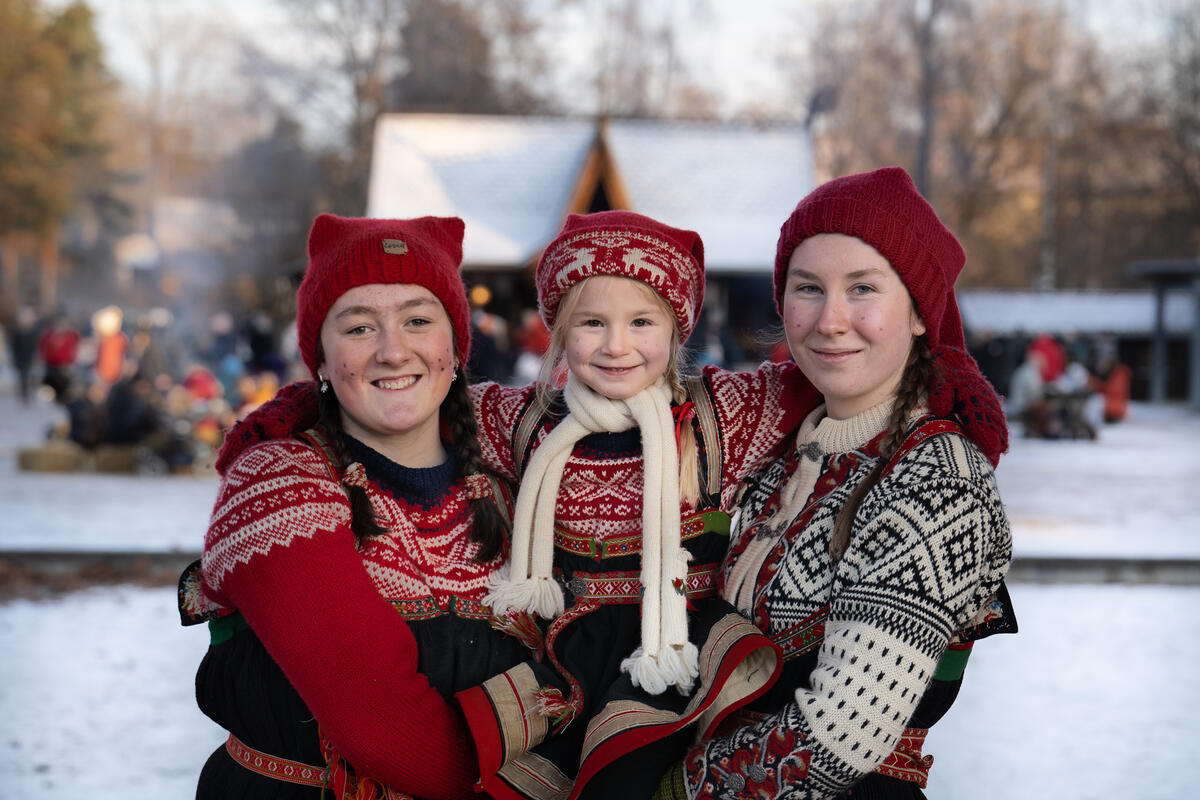
Source. Norsk Folkemuseum (where they have a fantastic Christmas market in December)

2. Explore Winter Activities

Try Ice Skating: Lace up your skates and glide across the ice at one of Oslo’s many outdoor ice rinks. Whether you’re a pro or a newbie, it’s a fun activity for all. The rinks at Spikersuppa and Frogner Stadion are popular choices and provide a delightful experience amidst the snowy landscapes.

Cross-Country Skiing or Tobogganing: Oslo’s surroundings offer excellent opportunities for winter sports. Try cross-country skiing in Nordmarka, the vast forest area accessible by the city’s metro. Alternatively, opt for tobogganing at Korketrekkeren for an exhilarating ride down the slopes.

3. Enjoy Cultural Delights

Visit Museums and Galleries: Beat the cold by diving into Oslo’s vibrant cultural scene. Warm up in the city’s museums and galleries. The Viking Ship Museum, Munch Museum, and the National Gallery are perfect spots to explore Norway’s rich history and art.

Attend Winter Performances: December in Oslo also offers a range of musical concerts, theatre performances, and ballet shows, especially around the holiday season. Check out what’s on at the Oslo Opera House or other theaters for a delightful cultural experience.

4. Indulge in Norwegian Cuisine

Savor Traditional Norwegian Dishes: Warm up with delicious Norwegian comfort food. Try classic dishes like fårikål (lamb and cabbage stew) or riskrem (a traditional rice pudding dessert). Indulge in hearty meals at local restaurants to experience authentic Norwegian flavors.

5. Witness the New Year’s Eve Spectacular

Celebrate New Year’s Eve in Style: December closes with a bang in Oslo. Join the celebrations at Karl Johans Gate or head to Ekeberg for a spectacular view of the fireworks lighting up the city skyline. Join in the lively atmosphere as locals and visitors welcome the new year with excitement and joy.

Are you ready to visit Oslo in December?

December in Oslo is a unique and delightful experience, offering a blend of festive celebrations, cultural indulgences, and exciting outdoor activities. Embrace the wintry magic, create unforgettable memories, and savor the charm of this Scandinavian gem as it sparkles under a blanket of snow. Oslo in December is an experience not to be missed!

Do not purchase a Netflix subscription while in Norway!

Are you coming to Oslo for a business trip? Or maybe you are in Oslo at the moment, and now you want to find something to stream on Netflix. But, you do not have a Netflix subscription yet. Well, if you plan on purchasing a Netflix subscription, you shouldn’t buy it while in Norway. Do you know why? You will most likely pay way more than you would pay in your home country!

During a recent study presented by netflix.fromabroad.org, you can compare the prices of a Netflix subscription in different countries around the globe. Since Netflix is a global company, you can sign up and purchase a subscription in almost all the countries of the world. But, would it be fair if a person in India would have to pay the same amount of money for a Netflix subscription as a person in Oslo? They might get access to the same content, but considering the big difference in salaries, it might be reasonable to say that it is fair that Norwegian people pay more for Netflix than those in India.

And, that leads us to the fact that you shouldn’t purchase a Netflix subscription while in Norway. How come? Norway is one of the most expensive countries in the world when it comes to the price of a Netflix subscription. Especially if you want to purchase the basic package, then Norway is among the 5 most expensive countries in the world. The only countries more expensive are Switzerland and Denmark.

Do not purchase your Netflix subscription in Oslo!
Norway is beautiful, but also very expensive. Picture from Pixabax.

The Netflix prices in Norway are high, but compared to the rest of the EU, they aren’t super-expensive. But, if you start comparing the prices of a Netflix subscription in Norway to prices in Southern-America, you will see some giant differences. For example, the price of a one-month subscription to the basic package in Norway should cost you 9,6USD. The price of the same subscription in Ecuador is 3,2USD. In other words, it is three times more expensive in Norway compared to Ecuador (and Argentina).

It doesn’t matter where you live or where you are when you stream content on Netflix. The price you pay only depends on where you originally purchased your subscription. So if you purchase a Netflix subscription while in Norway, you will pay the Norwegian Netflix subscription price for all your days. But, if you purchase a Netflix subscription in Ecuador, in Brazil, or maybe in Argentina, then you will pay that subscription fee for all your days. As a result, there is a money-saving aspect to this as well.

Would you like to know how you can save money on your Netflix subscription with this method? Check the following article to learn more.

One more thing that you might find annoying if you purchase a Netflix subscription in Norway is the fact that you will always see the Norwegian Netflix content as you travel within the EU. What do I mean?

If you have a Norwegian Netflix subscription and live in Germany, you will always see the content of Norwegian Netflix. This is due to the EU regulations for streaming that were introduced in 2018. The best solution for solving this is to register your Netflix account outside the EU. Then you will always see the content available of the country that you are currently in, something that is very useful if you travel within the EU, or if you want to use a VPN to change your Netflix region.

So, that was a little piece of advice to those who consider purchasing a Netflix subscription while in Oslo! Enjoy your travel!

Norway vs. Serbia – Euro 2020 qualification

On March 26th, it will be time for Norway to play against Serbia in the semi-final for the Euro 2020 qualification playoff. The Norwegians are small favorites in front of the match, but they are well prepared, knowing that Mitrovic and the rest of the Serbian squad will fight for their lives to win the match as well!

Before the European Championship in 2016, Norway had to play a play-off match against Hungary. Everyone rejoiced at the opponent and believed it to be the easiest way of getting to the European Championship. They were wrong! After losing against Hungary, first in Oslo, and a few days later in Budapest, the case was closed, and Hungary went to the European Championship were they did surprisingly well (at least during the group stage).

Once again, Norway has to qualify for the European Championship through a play-off round, but this time they will start against Serbia on March 26th. If they win that match, they will play against the winner of Israel and Scotland on March 31st.

The Euro 2020 play-off matches in Norway

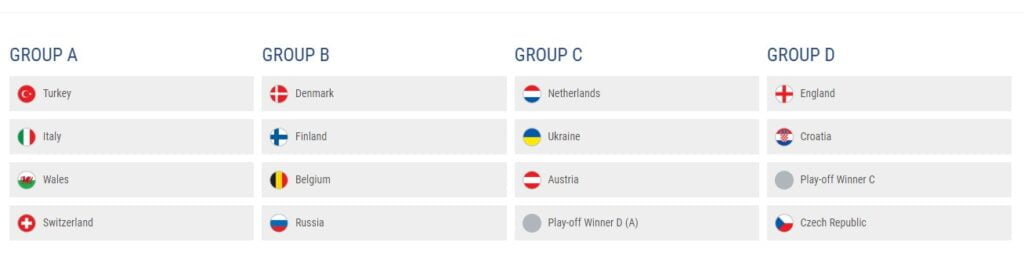
If Norway manage to win the play-off matches, then they will qualify for the European Championship and play in a group together with Croatia, England, and the Czech Republic. It is a tough group, but not at all an impossible group.

If Norway beat Serbia on March 26th…

If Norway can manage to beat Serbia on March 26th, the final against the winner of Scotland and Israel will be played in Norway as well. That is great news for the Norwegian players because playing in front of a home crowd is always an advantage.

How to watch Norway vs. Serbia online?

We don’t know so much yet about how and where you can stream this match online. You can, for sure, stream it on a streaming service such as Fubo TV in the United States, but besides that, there will be a pay-TV channel in Norway showing the match, and the same is true about the rest of Europe.

But, what about the European Championship itself?

We don’t know so much yet about who will broadcast the European Championship, but you can see a full list of Euro 2020 broadcasters right here. There you can also find information on how to stream the event on the Internet and so much more!

We will cheer for Norway on March 26th and hopefully also on March 31st. And then, who knows, maybe they will be there in the European Championship this summer between June 12th and July 12th, ready to fight with the best nations in Europe for the trophy?

The match against Serbia will be played at Ullevål stadium, the main stadium in Norway. It is located in the city of Oslo, and you can easily get there using public transportation in the Norwegian capital.